


3.3 Terminal velocity: exercise 1 (example)
Course subject(s)
3. Drag force
SKYSCRAPER
We stand on the roof of a skyscraper with two almost identical spheres. The only difference is the material that they are made of, as one is made out of wood and the other is made out of iron. We want to investigate their steady state (terminal) velocities, so we drop them off the roof sequentially.
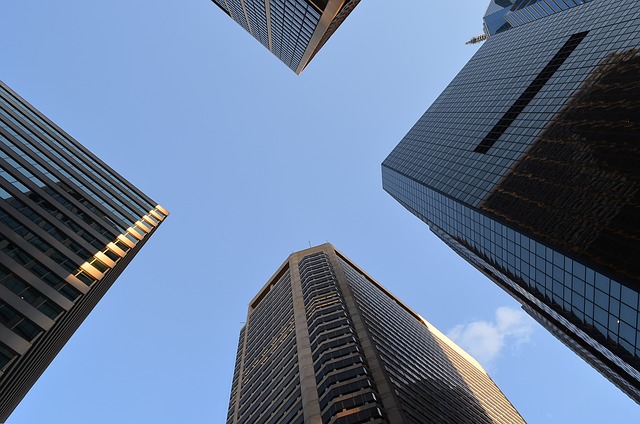
We drop the iron (ρ = 7800 kg/m3) sphere and we measure the time until it hits the ground. Then, we also drop the wooden sphere (ρ = 800 kg/m3) and proceed in the same manner.
Other relevant data: the diameter of the spheres is 0.100 meter, therefore the volume of the spheres is equal to 5.24 • 10-4 m3. The density of the air is 1.185 kg/m3. The viscosity of air is 1.81 • 10-5 Pa • s.
First, make a sketch of the situation!
You can find the formula sheet by clicking here.
DRAG COEFFICIENT VERSUS REYNOLDS
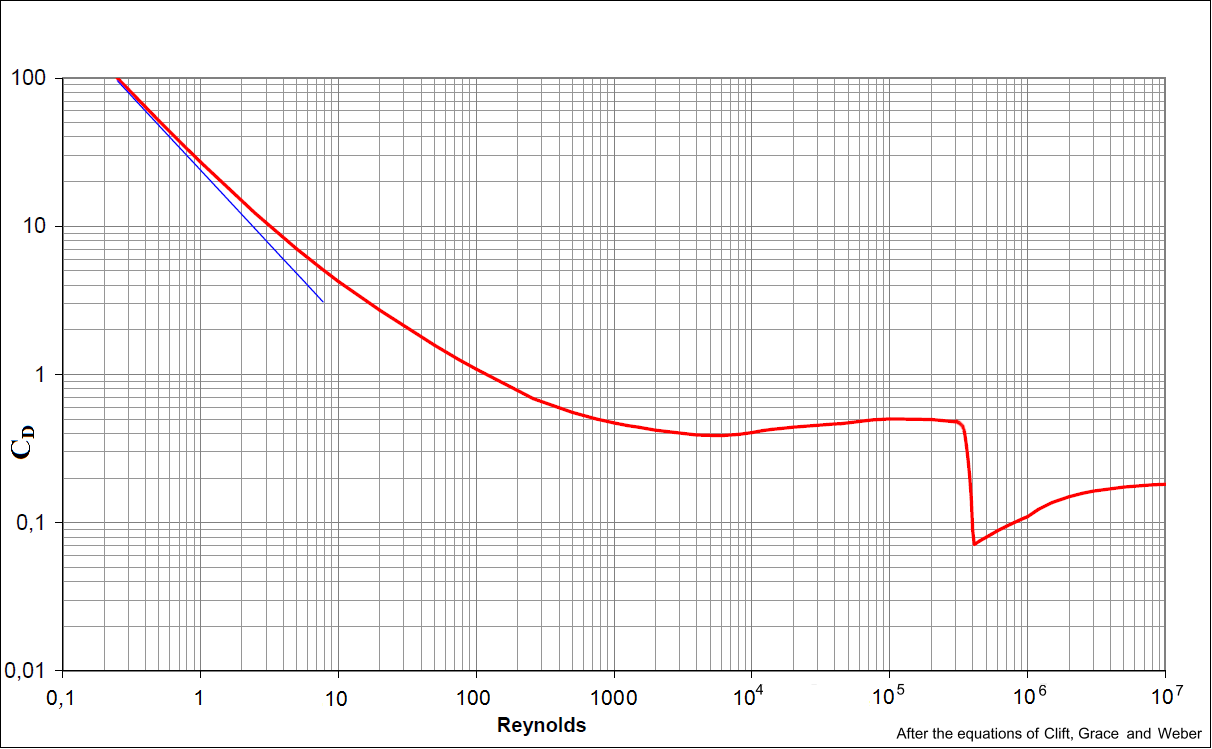
In order to determine the steady state velocity of the spheres, we will need to calculate the drag force. The graph below shows the drag coefficient as a function of the Reynolds number for a flow around spheres (red line). The blue line is a representation of Stokes’ law and shows good agreement for Re <1 only, which is not applicable in this case.

The Basics of transport phenomena by TU Delft OpenCourseWare is licensed under a Creative Commons Attribution-NonCommercial-ShareAlike 4.0 International License.
Based on a work at https://ocw.tudelft.nl/courses/basics-transport-phenomena/.