


Food for Thought: estimation
Course subject(s)
5. How precise is the estimate?
Do you remember the canal width video that was in the Warming Up part of Module 1?
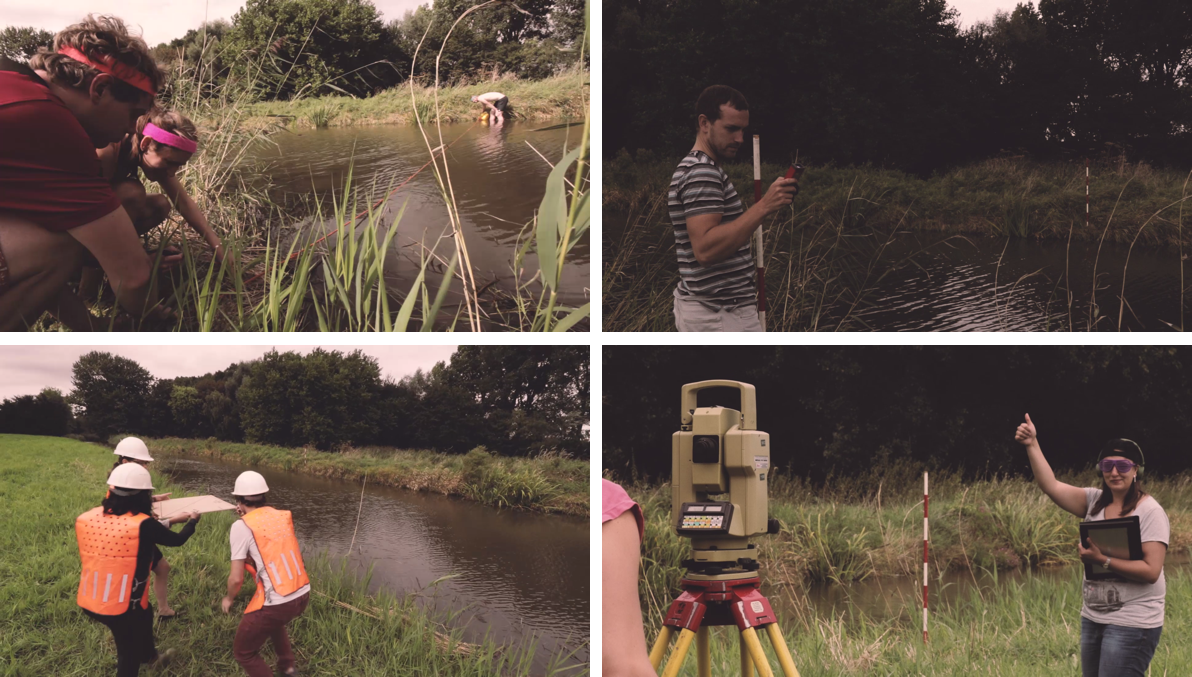
In the video, four teams measured the canal width using a different approach. We then asked you the following food for thought questions:
- how would you estimate the canal width from all their measurements?
- the lazy guy took several measurements with the laser device: why did he get different values?
- what kind of errors may have affected the measurements of the different teams?
- how to find out which technique/approach was best?
In the meantime you learned about different error types and how you can estimate the canal width using different measurements with different precisions. The best linear unbiased estimate will give you the result with best precision.
As a follow up, think about the following questions:
- how would you present your estimation results to the farmer (or: what would you present)?
- how to interpret the precision (or covariance matrix) of the estimators?
This module should help you answer these questions.

Observation Theory: Estimating the Unknown by TU Delft OpenCourseWare is licensed under a Creative Commons Attribution-NonCommercial-ShareAlike 4.0 International License.
Based on a work at https://ocw.tudelft.nl/courses/observation-theory-estimating-unknown.