


3.4.1 SSC Project Planning
Course subject(s)
Module 3. Planning Smart Sustainable Cities Initiatives
This section highlights the importance and the benefits of planning an SSC project, and how it is used. Thus, in this lecture, the main characteristics of the project, the aspects that must be included, and their consequences are presented.
Let’s start with some important definitions:
A project can be described as a temporary endeavor undertaken to create a unique product, service, or result (Project Management Institute, 2004).
When working with projects, an important concept called the triple constraint of Project Management is recurrent. It means that three main aspects must be considered:
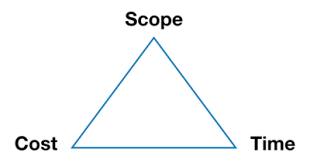
Tripe constraint of Project Management by Technical University of Denmark
- Scope: the project outcome.
- Schedule: the amount of time available to conduct the project.
- Cost: the amount of money available.
All three of these aspects must be managed simultaneously throughout the project, changes in one of these aspects will affect the others.
Moreover, when planning a project, some questions need to be asked, Why?, What?, When?, Who?, How?. Planning is about determining the essential aspects of a project, in order to do so, you must ask some questions.
In the following lecture, professor Dr. Ralf-Martin Soe explains these concepts, characteristics, and benefits of SSC planning. In addition, he applies these concepts considering a real case: the smart city Wien framework strategy, a planning outcome of the city of Vienna in Austria.
SSC Project Planning Lecture
Main Takeaways
- Planning is knowing where you are and where you want to be and how you are going to get there.
- Project planning can never be perfect as it is always in a dynamic situation, you can have your own plan but the environment around you is constantly changing.
- Among several benefits, proper planning helps define what should be done when; assist in managing crises and ensures a smoother implementation and induces proper focus on energy, time, money, and resources on priorities.

Smart and Sustainable Cities: New Ways of Digitalization & Governance by TU Delft OpenCourseWare is licensed under a Creative Commons Attribution-NonCommercial-ShareAlike 4.0 International License.
Based on a work at https://online-learning.tudelft.nl/courses/smart-and-sustainable-cities-new-ways-of-digitalization-and-governance/ /