


5.3.3 Collaborative governance
Course subject(s)
Module 5. Stakeholder Engagement
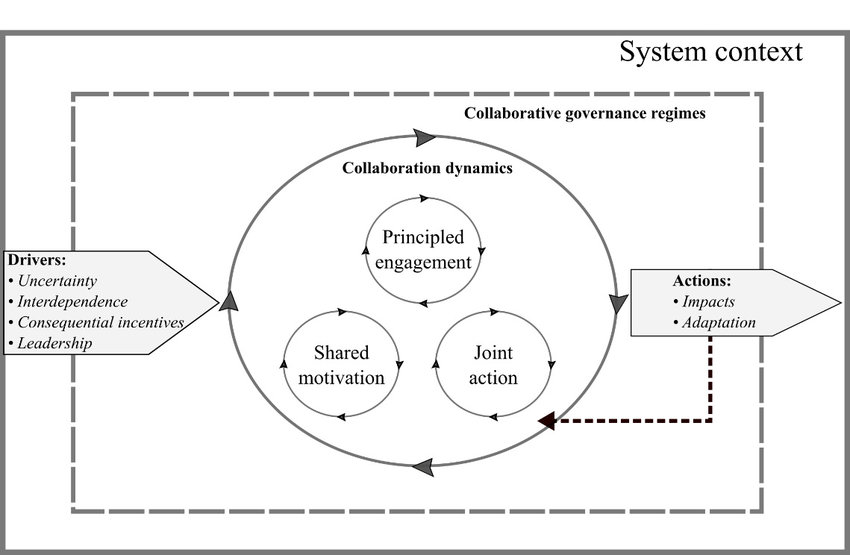
In the next web lecture by Professor Edimara Luciano from Pontifical Catholic University of Rio Grande do Sul, Brazil, we will discuss:
- The concept of collaborative governance including key concepts and approaches;
- The challenges of collaboration driving collaborative governance in contemporary public administration, as well as
- Their impact on increasing cities’ smartness and sustainability
Collaborative Governance Lecture
Main takeaways
- Understanding the challenges of collaboration is important to address complex issues and social necessities.
- Complex initiatives like the Smart and Sustainable Cities demand citizen participation and the engagement of public and private agencies, governmental and non-governmental organizations, cooperation among different government branches and levels, and even international cooperation.
- An important feature that helps distinguish Collaborative Governance from traditional decision-making is that the former establishes mechanisms to balance the formal power of the multiple actors involved in the decision-making process.

Smart and Sustainable Cities: New Ways of Digitalization & Governance by TU Delft OpenCourseWare is licensed under a Creative Commons Attribution-NonCommercial-ShareAlike 4.0 International License.
Based on a work at https://online-learning.tudelft.nl/courses/smart-and-sustainable-cities-new-ways-of-digitalization-and-governance/ /