


2.3.3 Specific Fuel Consumption
Course subject(s)
Module 2: How do Aircraft Fly?
Specific Fuel Consumption
In the previous lecture, you were shown the tremendous progress we have made in aviation in the past century. Next to astounding developments in size, range and speed of aircraft, we managed to take large steps in a crucial area for more environmentally friendly aviation: the fuel burn. Let’s examine this in more detail!
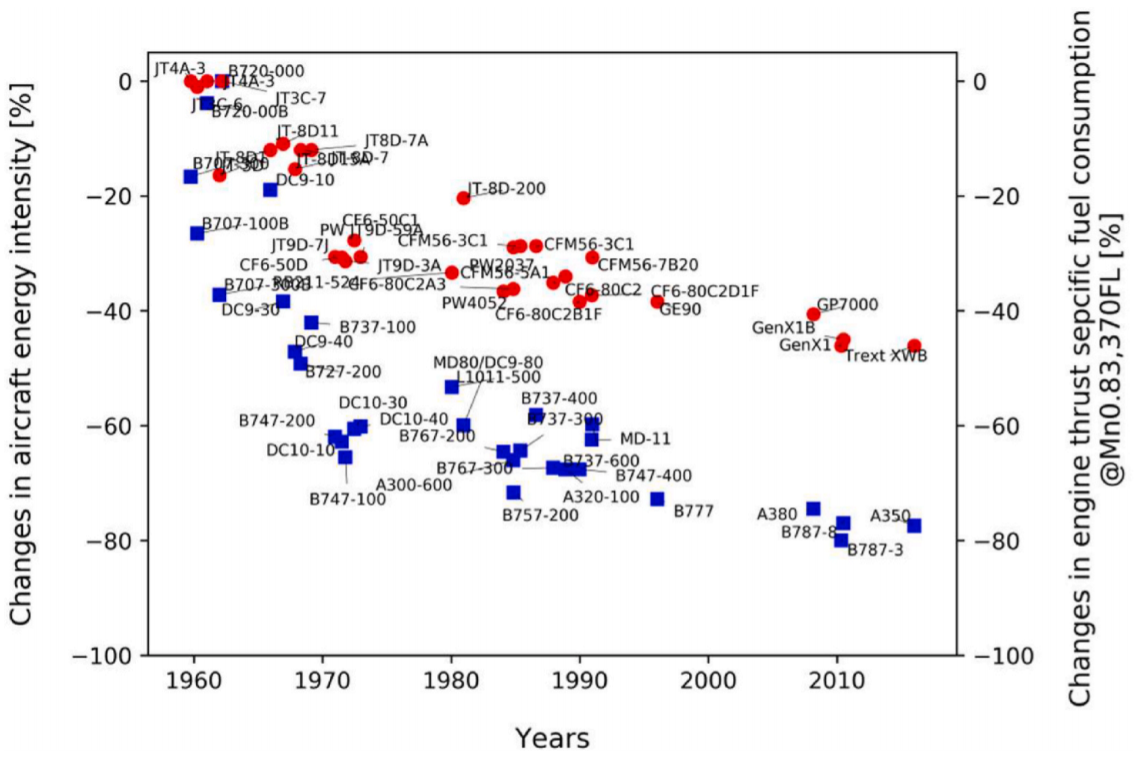
To interpret the graph from the lecture in more detail, we shall define two concepts Firstly, the aircraft energy intensity:

And secondly, the engine thrust-specific fuel consumption (TSFC):
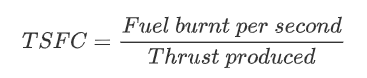
The aircraft energy intensity is shown on the graph as blue squares, and the TSFC is shown as red circles. As you can see, we managed to reduce the aircraft energy intensity by around 80% on the most modern passenger aircraft, compared to the first jet aircraft. You will notice a large part of this reduction coming from the engines: modern aircraft engines, such as the Rolls-Royce Trent XWB on the Airbus A350 and the General Electric GEnx on the Boeing 787 have achieved a reduction in TSFC of almost 50% compared to the first used jet engines.
As Dr. Gangoli Rao explained in the first lecture on propulsion, producing thrust using engines is essential for heavier-than-air flight. So how do we do this? Join us in the next lecture to find out.

Sustainable Aviation: The Route to Climate-Neutral Aviation by TU Delft OpenCourseWare is licensed under a Creative Commons Attribution-NonCommercial-ShareAlike 4.0 International License.
Based on a work at https://online-learning.tudelft.nl/courses/sustainable-aviation-the-route-to-climate-neutral-aviation/