


5.2.2 Eye in the Hand
Course subject(s)
Module 5 – Scale and Detail
Wouldn’t it be ideal to have a little eye on the top of your index finger. You could stretch your arm out to look out over a crowd and you could easily check the back of your head. Architects would especially benefit from this new body part because it would enable them to easily take a look at what eye-level looks like in their scale models.
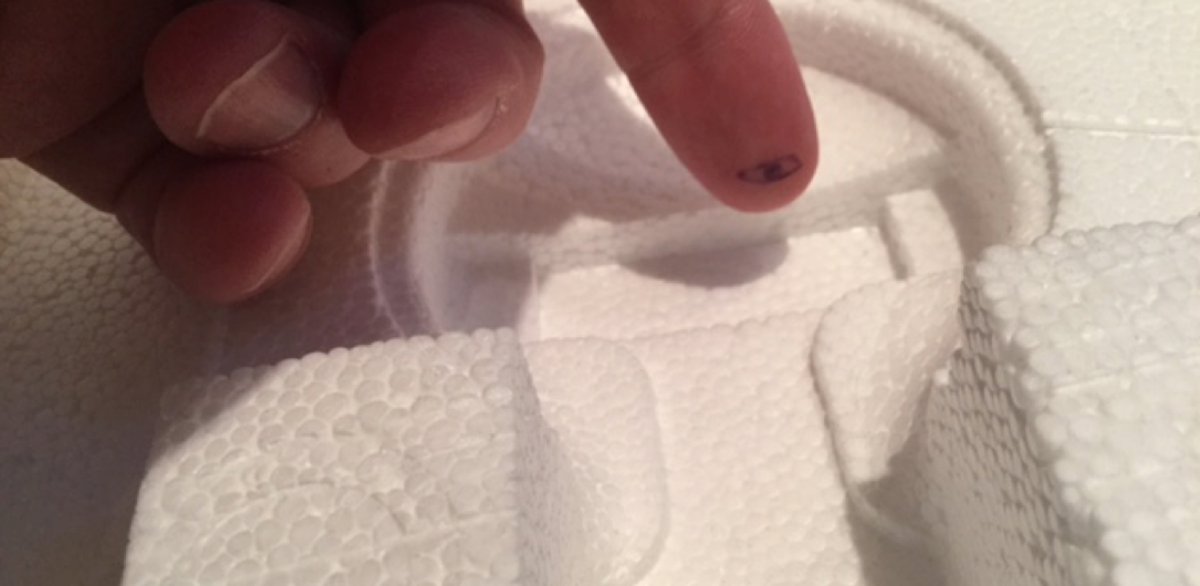
There are several methods to achieve the ‘eye in the hand’ without surgery.
A very practical solution is by using a mobile phone. If you hold the phone upside down, you can often achieve a camera height of 1cm above the floor of the scale model. In a 1:100 scale model that comes close to the eye-level of a very tall person.
Often in our class discussions, we try this technique whilst also live-streaming the phone camera view over a wifi network to a TV set. This helps advance discussions of ideas between students and teachers.

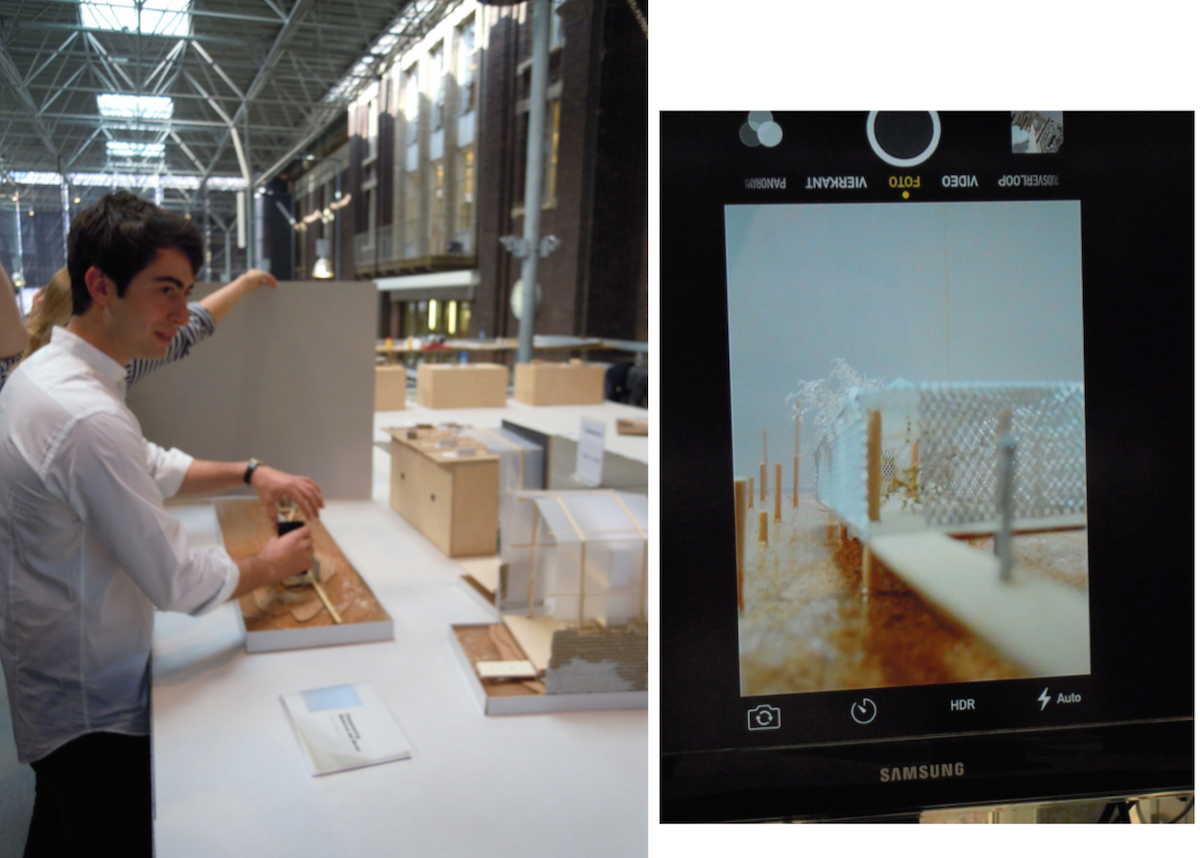
Examples of live-streaming the models made in The Delta Shelter.
It is also possible to use a more traditional solution based on a periscope. Here two parallel mirrors bring the view to a more convenient eye height.
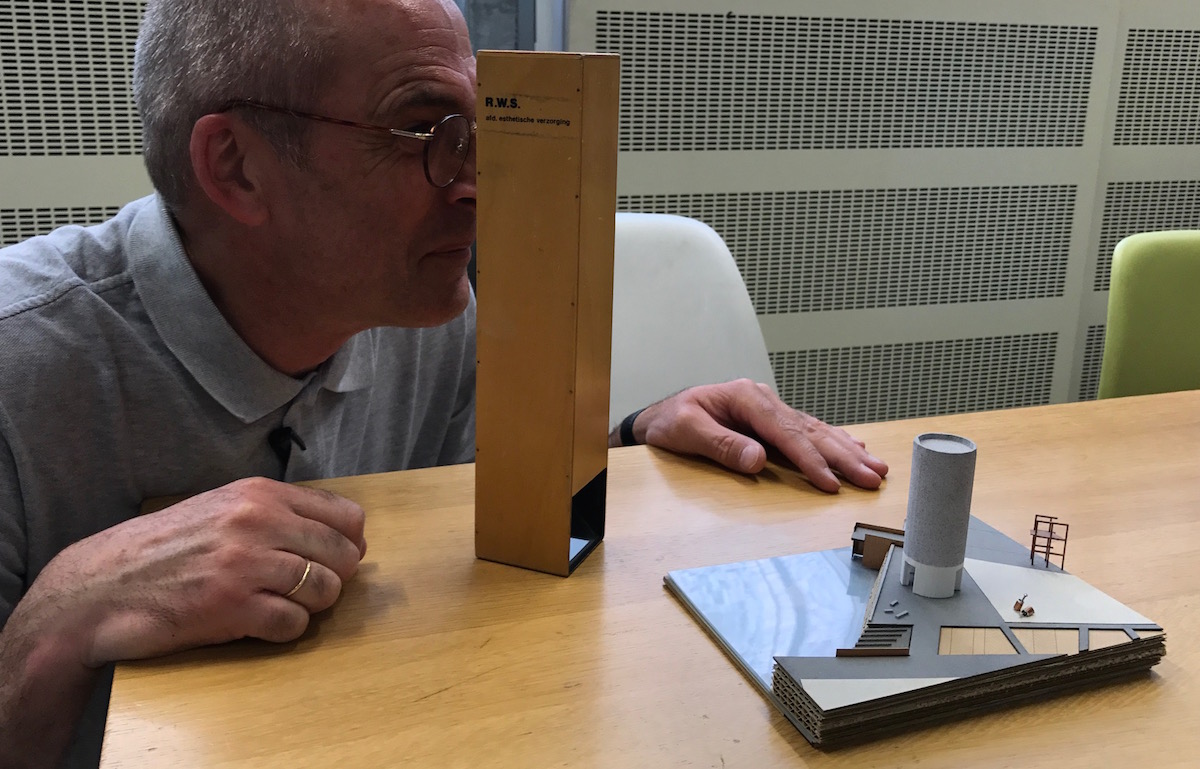
Peter Koorstra viewing a model through a periscope.

Models in Architecture by TU Delft OpenCourseWare is licensed under a Creative Commons Attribution-NonCommercial-ShareAlike 4.0 International License.
Based on a work at https://ocw.tudelft.nl/courses/models-architecture-design-physical-digital-models/.