


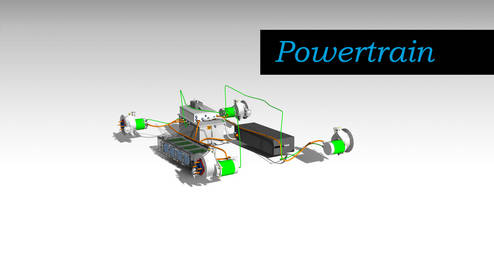
The powertrain forms the heart of the DUT race car. Without it, it doesn’t move. But obviously there’s more to it than that, find out the details on this page.
Cooling System
When generating power, heat is released. The motor needs to be cooled to keep it functioning properly. The DUT racecar uses water cooled electrical engines. You can learn more about cooling systems by watching lectures of our ‘stromingsleer‘ course (Dutch).
Motors and Motor Controllers
The DUT racecar is powered by AC Motors. Sounds easy, but it isn’t. Learn about the electric motors used in the racecar by taking classes about Electrical Machines and Drives and Electronic Power Conversion to study how the motors convert electricity into mechanical rotation.
Battery Pack
An electric car obviously has to have a way to store energy. This is done in the form of chemical energy in the battery pack. Learn more about the use of this battery pack by studying the principles of energy storage in rechargeable batteries in the course Sustainable Hydrogen and Electrical Energy Storage