


Introduction to module 7
This is the last module of the course. Thank you for joining us! By now you will embrace complexity!
In this last module we will focus on Urbanization as a major driver of infrastructure development.
In this module you will also find our peer review assignment. This assignment counts for 20% of your grade. Please check the deadlines for the peer review in section 7.4 or under ‘Course info’.
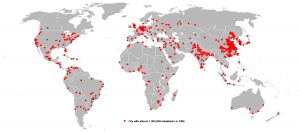
Since 2008, more than half of the current 7 billion world population is living in cities. By 2050, more than two thirds of the world population will be urban.
What is it that makes cities so attractive? Has infrastructure something to do with it? When it comes to these infrastructures, is it good or bad news that cities are growing, while rural areas are being depopulated? And what challenges do cities pose for infrastructure development, especially taking into account that the number of extremely large cities is increasing? What lessons can we learn from the previous modules about we way we should design, govern and regulate urban infrastructures?
We will have some surprising conclusions and best practices.
Content of this module
- Remaining part of this section: Short recap of the course and explanation why we focus on urbanization & infrastructures in this module.
- Section 7.2: Some major observations with respects to the development of infrastructures in cities, the main challenges and best practices from different places all over the world. This section also contains two bonus web lectures on urban engineering & water. In this section we will also summarize some basic lessons we learned during the course about we way we should co-design, govern and regulate the next generation of sustainable, green, inclusive and resilient infrastructures in cities.
-
7.2 Urbanization and infrastructures